Introduction
Professional landscapers and nursery workers use their pruning shears for hours every day—sometimes making hundreds or even thousands of cuts in a single shift. A bad pair doesn't just slow them down; it damages plants and strains hands, leading to reduced productivity and long-term repetitive strain injuries.
Not all pruning shears are equal. Consumer-grade tools from big-box stores are built to a price point, often using softer steel and generic ergonomics that fail under professional use. Professional-grade shears are engineered for precision, durability, and all-day comfort, with features like replaceable components, higher-grade blade steel, and ergonomic handles designed to reduce hand fatigue over long shifts.
This guide covers:
- The top five pruning shears of 2026 and what makes each stand out
- Key buying criteria for professional use
- How to choose the right pair for your role—landscape contractor, nursery propagator, or greenhouse manager
Key Takeaways
- Bypass pruners make clean, scissor-like cuts that protect live plant tissue and reduce disease risk
- Felco F-2 is the overall best pick for long-term investment; ARS HP-VS8XZ leads for effortless cutting feel
- Key buying factors include blade steel quality, cutting capacity, ergonomics, and whether replacement parts are available
- Professional-grade shears eliminate replacement costs and reduce hand fatigue over time
- Cleaning and sharpening blades regularly keeps professional shears performing reliably for years
Types of Pruning Shears: Bypass, Anvil, and Ratchet Explained
Understanding the three main pruning shear types helps you select the right tool for each task:
| Type | How It Works | Best For |
|---|---|---|
| Bypass | Sharpened blade slices past a curved counter-blade (scissors-style) | Live stems, ornamentals, nursery stock |
| Anvil | Single blade chops down onto a flat metal platform | Dead or dry woody stems only |
| Ratchet | Stepped mechanism lets you squeeze in stages, increasing pressure incrementally | Tough stems, users with reduced grip strength |
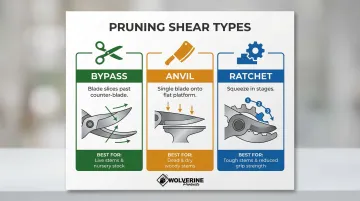
Bypass pruners make clean cuts with minimal cellular damage, protecting cambial layers and speeding plant recovery. Anvil pruners crush soft tissue on contact — fine for dead wood, but a disease risk on live plants. Ratchet pruners follow the same scissor-like bypass principle, with the stepped mechanism doing the grip work for you.
Why Bypass Pruners Dominate Professional Use
Bypass pruners are the overwhelming choice among professional landscapers, nursery workers, and growers. Horticultural research confirms that anvil pruners crush cambial tissue, delaying wound healing and increasing disease risk. The clean, scissor-like cut of bypass pruners protects live plant tissue and accelerates recovery—critical factors when pruning ornamentals, fruit trees, or nursery stock.
The five pruning shears reviewed below were each selected with this in mind — matching cut quality to professional use case.
Best Pruning Shears of 2026
These five shears were selected based on blade quality, cutting performance, ergonomics, durability, and value for professional and serious gardening use.
Felco F-2 One-Hand Pruning Shear
The Felco F-2 is the Swiss-made professional standard that has dominated commercial horticulture for decades. Built for medium-to-large hands, it's capable of cutting branches up to 1 inch in diameter with consistent precision.
Every single component is replaceable — blades, springs, screws, handles — making it a true lifetime tool. Key advantages:
- Lightweight forged aluminum handles reduce fatigue during extended use
- Hardened steel blade holds a sharp edge through thousands of cuts
- Built-in wire-cutting notch lets landscapers cut small wires without touching the primary edge
| Specification | Details |
|---|---|
| Type | Bypass |
| Max Cutting Capacity | 1 inch (25mm) diameter |
| Weight / Length | 0.55 lbs (251g) / 8.46 inches (215mm) |
| Blade Material | Hardened steel |
| Replaceable Parts | Yes (100% of components) |
ARS HP-VS8XZ Signature Heavy Duty Pruner
ARS is a Japanese precision cutting tools manufacturer known for razor-sharp blades and refined engineering. The HP-VS8XZ is engineered for users who prioritize an almost effortless cutting feel, making it a favorite among professional rose growers, nursery propagators, and anyone making hundreds of cuts per day.
The high-carbon steel blade is ground to a razor edge with hard-chrome plating that resists rust and sap buildup. Japanese-standard manufacturing tolerances keep the blade true even after heavy use.
Spring tension and grip geometry are calibrated to minimize hand fatigue, the squeeze-action latch allows one-handed operation, and urethane cushions on the wire coil springs absorb impact through long sessions.
| Specification | Details |
|---|---|
| Type | Bypass |
| Max Cutting Capacity | 0.87 inches (22mm) diameter |
| Weight / Length | 0.49 lbs (220g) / 7.87 inches (200mm) |
| Blade Material | High-carbon steel with hard-chrome plating |
| Replaceable Parts | Yes |
Corona BP 3160 Classic Cut Bypass Pruner
Corona is a widely trusted mid-range brand that has been the go-to pruner for nursery workers and landscape crews for decades. The BP 3160 handles branches up to 3/4 inch and is the most common professional workhorse pruner on the market.
The heat-treated MAXFORGED steel alloy blade resharpens repeatedly, extending tool life well beyond a single season. The slant-ground, narrow-profile head allows ergonomic wrist positioning and close cuts in tight spaces. Bright red non-slip handles are easy to spot when set down in dense plantings — a small detail that saves time on busy job sites. Replacement parts and blades are available directly from the manufacturer.
| Specification | Details |
|---|---|
| Type | Bypass |
| Max Cutting Capacity | 3/4 inch diameter |
| Blade Material | Heat-treated MAXFORGED steel |
| Replaceable Parts | Yes |
Fiskars PowerGear2 Pruner
The Fiskars PowerGear2 is the best option for cutting through thick, woody stems with less hand effort. Its patented gear-based mechanism multiplies cutting power, delivering up to 3X more cutting force than single-pivot tools — ideal for arborists, orchard workers, and crews dealing with overgrown shrubs.
The gear system translates hand pressure into noticeably more cutting force per squeeze. A low-friction blade coating helps the pruner glide through tough stems, and the contoured, rolling handle follows the natural motion of your grip. For professionals who need heavy-duty cutting capacity without a premium price, it's the practical choice.
| Specification | Details |
|---|---|
| Type | Bypass |
| Max Cutting Capacity | 3/4 inch diameter |
| Weight / Length | 8.75 inches |
| Blade Material | Hardened steel with low-friction coating |
| Replaceable Parts | No |
Bahco P121-20-F Ergo Bypass Pruner
Bahco is a Swedish professional tool brand known for ergonomic design. The P121-20-F Ergo was purpose-built to reduce the risk of repetitive strain injuries, making it ideal for propagators, greenhouse workers, and landscapers who prune for extended hours.
The handle geometry and grip angle reduce wrist deviation and compression force — the two primary contributors to cumulative trauma disorders in high-volume pruning work. The hardened Swedish steel blade pairs with a narrow cutting head for clean access in tight spaces. Most budget brands skip left-handed options entirely; Bahco's 25mm model (P121-23-LEFT) covers both.
| Specification | Details |
|---|---|
| Type | Bypass |
| Max Cutting Capacity | 3/4 inch (20mm) diameter |
| Weight / Length | 0.56 lbs (255g) / 7.75 inches (200mm) |
| Blade Material | Hardened Swedish steel |
| Replaceable Parts | No |
What to Look for When Buying Pruning Shears
Blade Steel Quality
Blade metallurgy determines edge retention, sharpness, and maintenance requirements:
- High-carbon steel achieves a sharper edge and maintains it longer but requires more maintenance to prevent rust. Professional pruning blades typically feature a Rockwell Hardness (HRC) between 58 and 60, balancing sharpness with durability
- Stainless steel resists rust and requires less maintenance but holds a slightly less keen edge
- Coated blades (hard-chrome, PTFE, or proprietary low-friction coatings) reduce sap buildup and cutting friction, making cuts easier while protecting the underlying steel from corrosion
Professional-grade manufacturers like Wolverine Tools use controlled production processes to ensure consistent blade hardness across every tool—something consumer-grade alternatives rarely guarantee.
Cutting Capacity
Most hand pruners cut between 3/4 inch and 1 inch in diameter. Matching rated capacity to your most common task matters: overloading a pruner accelerates wear and damages both blade and plant tissue.
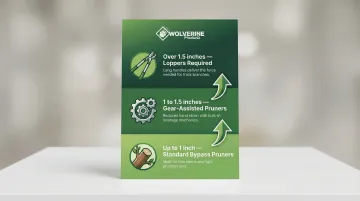
For heavier work, consider stepping up:
- Stems up to 1 inch: Standard bypass pruners handle most pruning tasks
- Stems 1–1.5 inches: Gear-assisted models like the Fiskars PowerGear2 reduce required hand force
- Branches over 1.5 inches: Loppers are the appropriate tool
Ergonomics and Hand Size
Handle length, grip width, and spring tension all affect comfort during extended use:
- Look for adjustable tension mechanisms that let you customize the tool to your hand strength
- Padded, non-slip grips reduce pressure points and prevent blisters
- Some brands like Felco and Bahco offer models specifically sized for smaller hands or left-handed users
Research on landscape workers shows that 85.5% report work-related musculoskeletal disorders, with wrist and hand regions among the most affected. For professionals making hundreds of cuts daily, ergonomics directly affects long-term physical health.
Replacement Parts and Repairability
A professional-grade pruner should have a published parts list and replaceable blades, springs, and bolts. A pair with replaceable parts that costs $60 upfront will nearly always be cheaper over five years than cycling through three $25 budget pairs that can't be repaired.
Felco and ARS exemplify this approach: Felco offers a comprehensive spare parts catalog where every component can be replaced, while ARS backs its VS series with a 25-year guarantee against manufacturing defects. Consumer-grade tools typically offer no replacement parts, so a broken spring or dull blade means buying a new tool.
Weight and Balance
In professional use—where hundreds to thousands of cuts happen daily—a pruner that is too heavy or unbalanced causes cumulative fatigue. Professional-grade bypass pruners typically weigh between 220g and 255g (7.8 oz–9.0 oz). Every ounce accumulates over a full workday of repetitive cuts. Look for tools where the center of gravity aligns with the center of your gripping hand for optimal balance.
How We Chose the Best Pruning Shears
Our evaluation criteria included:
- High-carbon steel blade construction with verified heat treatment and corrosion-resistant coatings
- Consistent cutting performance at rated capacity, not just under ideal conditions
- Handle geometry, grip materials, and spring tension suited to extended-use comfort
- Published parts catalogs and accessible manufacturer support for replacement parts
- Warranty terms that reflect genuine commitment to product longevity
- Field feedback from professional landscapers and nursery workers, not just lab specs
These criteria also informed which buyer pitfalls matter most. Common mistakes include prioritizing low upfront price over long-term cost-per-use, ignoring hand size compatibility, and overlooking parts availability—all of which lead to premature replacement of otherwise fixable tools.
Selection went beyond brand recognition. Professional distribution channel availability, manufacturer quality standards, and documented field longevity all shaped the final list.
Conclusion
The right pruning shear comes down to use case—daily professional volume, cutting capacity, hand size, and how much you want to invest upfront versus over time.
Professionals should treat pruning shears the same way they treat any critical hand tool: buy once from a manufacturer that stands behind their products, maintain the tool properly, and expect it to last years, not just a season or two. Tools with replaceable parts and lifetime warranties deliver far better value than disposable alternatives, even at a higher upfront cost.
Wolverine Tools manufactures pruning shears and bypass pruners built to the same "Tools Not Toys" standard as its contractor shovels, rakes, and specialty equipment—all backed by a lifetime warranty against manufacturer defects.
These pruning tools are available through wholesale landscape suppliers, garden centers, and local hardware stores nationwide. Find an authorized retailer near you to explore Wolverine's full range of hand tools.
Frequently Asked Questions
What is the best pruner for a garden?
For most garden tasks, a bypass pruner is the best choice due to its clean scissor-like cut that protects live plant tissue. The Felco F-2 is the professional gold standard with lifetime repairability, while the Corona BP 3160 offers excellent performance at a mid-range price point.
Which is better, bypass or anvil pruners?
Bypass pruners are better for most tasks because they make clean cuts on live plant tissue without crushing stems, which reduces disease risk and speeds healing. Anvil pruners are better suited for cutting dead wood and bulk removal where cut precision is less critical.
What size pruning shears do I need?
Most hand pruners handle branches up to 3/4 to 1 inch in diameter. Choosing the right size depends on your most common tasks—general garden use suits 3/4 inch capacity, while heavier landscape work may call for a pruner rated to 1 inch or a gear-assist mechanism for thicker stems.
How long should a good pair of pruning shears last?
Professional-grade pruners with replaceable parts—like Felco or ARS—last decades with regular cleaning, oiling, and sharpening. Budget consumer-grade pruners typically survive one to three seasons before blades dull beyond recovery or key parts fail.
How do I sharpen pruning shears?
Sharpen only the beveled (angled) edge using a sharpening stone, diamond file, or emery cloth. Follow the existing bevel angle (typically around 23 degrees) with smooth strokes, then lightly clean the flat side to remove any burr.
How do I maintain pruning shears to extend their life?
A few habits keep pruners in working shape for years:
- Wipe blades after each use to remove sap and debris
- Disinfect periodically with rubbing alcohol or diluted bleach to prevent disease spread
- Apply a drop of oil to the pivot point and spring
- Store in a dry location with the safety latch engaged