Introduction
An uneven lawn isn't just an eyesore—it's a maintenance nightmare. Low spots collect water, creating muddy patches and poor drainage. High spots scalp when you mow, leaving bare dirt and patchy grass. If you've ever twisted an ankle crossing your yard or watched puddles linger for days after rain, you know the problem.
A quality lawn leveling rake solves this directly. Unlike a standard landscape rake—which has splayed tines designed to move gravel or debris—a leveling rake features a wide, flat box-style head that drags and spreads topdressing materials (sand, compost, soil blends) evenly across turf without scalping or uprooting grass.
This guide covers the top 5 lawn leveling rakes for 2026, with a breakdown of what actually separates a useful tool from a frustrating one.
Key Takeaways
- Frame rigidity separates effective leveling rakes from ones that leave ridges — flex is the enemy of a flat lawn
- Best overall: Gardease Lawn Leveling Rake (30″ × 10″) for consistent rigidity and wide coverage
- 30–36″ heads handle most yards; 45″ heads move more material per pass but reduce precision near edges
- Stainless steel and galvanized finishes hold up to repeated topdressing — powder-coated frames corrode faster
- Match head width to your project scale; oversizing slows you down on smaller or uneven sections
What Is a Lawn Leveling Rake (and Why It Matters for a Flat Yard)
A lawn leveling rake features a wide, flat head, typically 30–48 inches wide and 10 inches deep. It's designed to drag and distribute topdressing material into low spots while keeping the head level with the turf. Unlike traditional rakes with tines that dig into soil, leveling rakes glide over existing grass without tearing crowns or damaging the turf canopy.
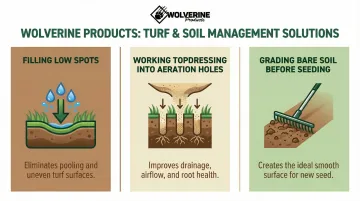
Most landscape professionals rely on leveling rakes for three core tasks:
- Filling low spots and depressions with sand, soil, or compost to eliminate areas that trap water and cause drainage problems
- Working topdressing into aeration holes and the turf canopy to speed up thatch breakdown and improve rootzone physical properties
- Firming and grading bare soil surfaces before seeding or sodding new turf
The right tool makes a real difference here. Bow rakes tear grass crowns, while flexible leaf rakes lack the rigidity to move heavy soil or sand. A leveling rake's box-style geometry is engineered for the thin, uniform distribution turf management requires — typically 1/8 to 1/4 inch per pass to avoid suffocating grass. Knowing what separates a quality leveling rake from a subpar one makes choosing the right model much simpler.
Best Lawn Leveling Rakes for a Flat Yard in 2026
These picks cover the full range of use cases — from occasional residential topdressing to frequent professional work. Each was evaluated on head dimensions, handle construction, material durability, and real-world usability:
- Build quality: frame rigidity, weld strength, corrosion resistance
- Handle performance: adjustability, length, grip fatigue on longer jobs
- Coverage efficiency: head width relative to yard size and task type
Gardease Lawn Leveling Rake — Best Overall
The Gardease 30″ × 10″ leveling rake delivers the best all-around performance for most yard sizes and topdressing tasks. Its rigid metal frame construction uses 2mm thick reinforced steel—double the standard 1mm thickness—with fully reinforced welds that prevent bending under heavy loads.
The 78-inch adjustable 3-piece handle lets users fine-tune their working angle, which is useful when switching between spreading and smoothing passes. The powder-coated galvanized steel construction resists corrosion while maintaining the rigidity needed to keep the head flat during use.
| Feature | Specification |
|---|---|
| Head Size | 30″ × 10″ |
| Handle | 78″ adjustable metal (3-piece) |
| Material | Powder-coated galvanized steel (2mm reinforced) |
| Best For | General topdressing, low spot filling, most residential lawn sizes |
DEEGETEL Lawn Leveling Rake — Best Value
The DEEGETEL 30″ × 10″ leveling rake offers solid metal construction at a reduced price point, making it a practical option for homeowners who topdress seasonally. Its upgraded S-shaped full welding process creates a secure connection between the handle and plate, preventing breakage during use.
The fully metal frame and 78-inch adjustable handle deliver the rigidity needed to prevent head flex. The core specs — head size, handle length, and frame rigidity — match the Gardease closely; the main difference is the welding style and a lower price tag.
| Feature | Specification |
|---|---|
| Head Size | 30″ × 10″ |
| Handle | 78″ adjustable metal |
| Material | Metal with S-shaped welding |
| Best For | Seasonal topdressing on budget, small-to-medium yards |
JivaJot Lawn Leveling Rake — Best Budget
The JivaJot 33″ × 10″ is the most affordable entry into quality lawn leveling without sacrificing head dimensions. Unlike most budget rakes, both the head and handle are stainless steel — not galvanized or powder-coated — which means better long-term rust resistance at a lower cost.
The 78-inch adjustable handle includes a 0-180° angle joint for better maneuverability around obstacles. At 33 inches wide, it also covers more ground per pass than the 30″ heads on pricier models.
| Feature | Specification |
|---|---|
| Head Size | 33″ × 10″ |
| Handle | 78″ adjustable stainless steel |
| Material | Stainless steel head and handle |
| Best For | Budget-conscious homeowners; occasional leveling and topdressing |
LawnVigor Lawn Leveling Rake — Best Heavy-Duty
Built for frequent and professional use, LawnVigor's 30″ × 10″ pairs a 304 stainless steel head with a 78-inch adjustable 2-piece hardwood handle (1 3/8″ diameter). This combination delivers superior weight balance for frequent or professional use.
The stainless steel head resists corrosion from wet sand and soil blends, while the hardwood handle absorbs vibration better than all-metal builds, reducing fatigue on larger jobs. The enclosed "U" shaped crossbar design prevents dirt and debris from accumulating inside the frame—a common issue with open-frame designs.
| Feature | Specification |
|---|---|
| Head Size | 30″ × 10″ |
| Handle | 78″ adjustable hardwood (2-piece) |
| Material | 304 stainless steel head, hardwood handle |
| Best For | Frequent use, professional landscapers, heavy topdressing mixes |
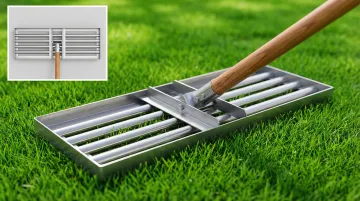
Seeutek Lawn Leveling Rake — Best Wide (45″)
For large open lawns, the Seeutek 45″ × 10″ is the standout choice. The alloy steel head and 78-inch threaded alloy steel handle are built specifically for covering ground fast — fewer passes, less time.
The 45-inch head width significantly reduces total working time on expansive yards, though the added width requires more upper-body control and makes it less precise for tight areas or spot treatments. The 0-180° adjustable angle accommodates different user heights and grass lengths. Best suited for open lawns over 5,000 square feet.
| Feature | Specification |
|---|---|
| Head Size | 45″ × 10″ |
| Handle | 78″ adjustable alloy steel (threaded) |
| Material | Alloy steel head and handle |
| Best For | Large open lawns, fast full-coverage topdressing |
What to Look For When Buying a Lawn Leveling Rake
Head Width and Yard Size
30–36″ heads work well for most residential yards because they balance coverage with control. They're easier to steer around edges, flower beds, and obstacles while still covering ground efficiently.
45″+ heads cut time on larger spaces but are harder to maneuver. If your lawn exceeds 5,000 square feet and has few obstructions, a wider head makes sense. For typical suburban yards with landscaping features, stick with 30–36″.
Frame Rigidity and Weld Quality
This is the single most important structural factor. A head that flexes or twists under pulling pressure won't sit flat and will leave ridges in the topdressing. Look for fully welded (not riveted or bolted) steel or alloy steel frames.
Professional contractors specifically prioritize rigid frames to avoid re-working passes. Bolted-together or thin-gauge heads flex when dragging heavy, damp materials like sand and compost, creating an uneven, washboard-like surface.
Handle Length and Stiffness
Handles around 72–78″ reduce back strain by allowing an upright working posture. Occupational health guidelines emphasize that long handles reduce severe trunk flexion (stooping) and lower back strain during ground-level tasks.
However, a flexible handle makes it nearly impossible to keep the head level under load. Professional-grade rigid handles outperform consumer-grade hollow or thin handles, which bend when you apply pressure.
Edge Design and Turf Safety
Beveled or rounded front edges glide over grass blades without snagging. Sharp or boxy edges dig into turf and create ridges, especially when filling low spots. This is a common issue with low-quality or repurposed landscape rakes used for leveling.
Material and Rust Resistance
Since topdressing material—especially sand and compost mixes—is often damp, the head and hardware need to resist corrosion.
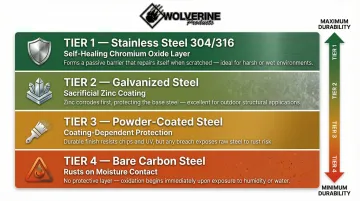
Material durability ranking (most to least durable):
- Stainless steel (304/316) forms a self-healing chromium oxide layer that holds up indefinitely against wet, abrasive soils
- Galvanized steel uses a sacrificial zinc coating that protects the underlying steel until the zinc depletes
- Powder-coated steel relies on a physical barrier that protects as long as the coating stays intact
- Bare carbon steel rusts immediately on moisture contact
For landscaping professionals who level turf regularly, contractor-grade tools built from materials like chromoly steel and aircraft aluminum hold up under repeated exposure without the replacement costs of lighter consumer alternatives. Wolverine Tools, manufacturing professional-grade equipment since 1994, backs every tool with a lifetime warranty against manufacturer defects.
How We Chose These Lawn Leveling Rakes
We evaluated each rake on the criteria that actually affect field performance—not just price or brand name:
- Head rigidity and weld quality
- Handle construction and material
- Overall durability under repeated use
- Head width options for different yard sizes
- Performance in real topdressing conditions
Common Buying Mistakes
- Prioritizing head width over frame stiffness — a 45″ head that flexes performs worse than a rigid 30″ head
- Going with the cheapest option — budget rakes flex under load, forcing extra passes or early replacement
- Using a tined landscape rake instead of a leveling rake — different geometry means uneven topdressing distribution and turf damage
No One-Size-Fits-All Solution
Avoiding those mistakes is easier when you know what you actually need. This guide covers different yard sizes, use frequencies, and budget tiers so you can match the tool to your situation. A homeowner topdressing once per season has different requirements than a landscaper leveling multiple properties per week.
Conclusion
A level lawn affects more than aesthetics—it improves drainage, mowing quality, and long-term turf health. The right leveling rake makes the difference between a smooth, professional result and a frustrating, uneven finish.
Durability should outweigh upfront cost. Tools that flex, rust, or break mid-job cost more over time than contractor-grade options built to last. For landscaping professionals who level turf regularly, Wolverine Tools offers hand tools manufactured to professional standards since 1994—backed by a lifetime warranty against manufacturer defects.
Wolverine Tools are available exclusively through wholesale landscape suppliers, garden centers, and local hardware stores nationwide.
Frequently Asked Questions
What is the difference between a lawn leveling rake and a landscape rake?
A lawn leveling rake has a wide, flat box-style head designed to drag and smooth topdressing materials across turf, while a landscape rake has splayed tines designed to move and grade loose material like gravel or soil. Using a landscape rake for lawn leveling will scatter material rather than smooth it — the box head is what creates a consistent, flat finish.
What size lawn leveling rake head is best for my yard?
30–36″ heads are best for most residential yards, offering a good balance of coverage and control. 45″ heads are suited for large open lawns over approximately 5,000 square feet where speed matters more than precision around obstacles.
How do you use a lawn leveling rake for topdressing?
Apply topdressing material in small piles across the lawn, then use the rake in slow, flat pulling strokes to drag and spread material into low spots. Avoid pushing, which piles material rather than leveling it evenly.
Can I use a lawn leveling rake on wet grass?
Topdress and level when grass is dry or only slightly damp. Wet turf compresses under the rake head, making it harder to achieve a level result and risking grass damage or clumping of the topdressing material.
What material is best for a lawn leveling rake head — steel or aluminum?
Steel (especially stainless or galvanized) offers superior rigidity and durability for heavy topdressing mixes, while aluminum is lighter and corrosion-resistant but flexes more under load. If you're working with dense sand-soil mixes or covering large areas repeatedly, a steel head holds its shape and delivers consistent downforce throughout the job.