Introduction
Professional landscapers and contractors burn through cheap tools fast — and that replacement cycle is expensive. A $15 shovel that snaps after three months costs far more over five years than a $60 professional-grade model built to last decades. Too many buyers learn this the hard way after a tool bends, rusts, or fails mid-job.
This guide breaks down expert-tested picks across key tool categories, the material and construction specs that signal real durability, and what separates professional-grade equipment from the store-shelf imitations that fill most retail aisles.
Key Takeaways
- Professional-grade tools prioritize material quality—chromoly steel, pulltruded fiberglass, aircraft aluminum—over low sticker price
- Five contractor essentials: shovels/spades, digging tools, landscape rakes, material handling equipment, and nursery tools
- Lifetime warranties signal manufacturer confidence in build quality
- Contractor-grade tools eliminate replacement cycles and outperform consumer alternatives under heavy use
What to Look for in a Gardening Tool
Three primary factors determine tool longevity: material quality (blade/head composition), handle construction (fiberglass vs. wood vs. hollow metal), and ergonomic design that reduces fatigue during extended use. For landscape and nursery professionals, getting these factors right means fewer mid-job failures, no emergency replacements, and tools that keep pace with demanding site conditions.
Forged vs. Stamped Tool Heads
Forged steel heads are formed under immense pressure, aligning the metal's grain flow to the tool's shape and allowing variable thickness—thicker at the socket for strength, thinner at the edge for cutting. Stamped heads are machine-pressed from sheet metal, creating uniform thickness and stress points that fail under leverage.
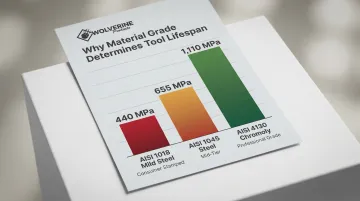
The material itself matters just as much. Chromoly steel (AISI 4130) offers an Ultimate Tensile Strength of up to 1,110 MPa when heat-treated, compared to just 440 MPa for mild carbon steel (1018) used in cheap stamped blades. That's more than double the strength, which significantly reduces blade deflection or snapping when prying roots or working rocky soil.
The Most Common Buying Mistake
Prioritizing price or brand recognition over material specs and warranty terms is the fastest way to waste money. Before purchasing, read the product spec sheet:
- Steel gauge: 14-gauge or heavier for shovels and digging tools
- Handle material: Pultruded fiberglass (weather-resistant, non-conductive) or solid hardwood (ash or hickory)
- Warranty terms: Lifetime warranty against defects signals manufacturer confidence
- Construction details: Look for forged heads, double-riveted joints, and extended sockets
Manufacturers who build to professional standards publish these specs. If they don't, treat it as a red flag and move on.
Best Gardening Tools of 2026: Expert-Tested Picks
These picks were chosen based on hands-on testing, material durability, ergonomics, and real-world performance across different garden types and soil conditions.
Best Pruning Shears: Felco F-2 One-Hand Pruning Shear
The Swiss-made Felco F-2 remains the professional standard for bypass pruners. It features hardened steel blades and a sap groove that prevents sticking during repeated cuts. Suitable for branches up to 1 inch thick, it weighs just 0.55 lbs but delivers decades of performance.
Built for the long haul:
- Every component is replaceable—blades, counter-blade, spring, shock absorbers
- Rubberized shock-absorbing grip reduces hand fatigue during extended pruning sessions
- Forged aluminum handles carry a lifetime warranty
- Pricing ranges from $71 to $86, with professional landscapers reporting 25+ years of use with routine blade replacements
Best Garden Shovel: Contractor-Grade Round Point Shovel
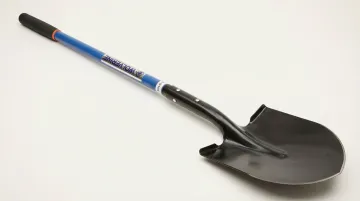
Professional-quality round point shovels feature 14-gauge or heavier steel blades, full-length fiberglass or hardwood handles, and a forward-turned step for boot placement—features common in contractor-grade shovels designed for daily landscaping use.
Professional landscapers and contractors turn to purpose-built brands like Wolverine Tools for contractor-grade shovels built from chromoly steel and pulltruded fiberglass—materials that outlast retail-store alternatives—backed by a lifetime warranty against manufacturer defects.
Specific models like the Wolverine WL100 (48-inch long handle) and WD100 (29-inch D-handle) feature 14-gauge tempered steel blades with two-rivet head attachment and forward-turned step design.
Why gauge and construction matter:
- Heavier-gauge blades maintain their edge in rocky or clay-heavy soils
- Closed-back blade designs allow debris to release cleanly
- Extended neck reinforcement prevents handle breakage at the socket
- Tempered steel resists bending under leverage
Best Garden Trowel: Wilcox 14-Inch All-Pro Digging Trowel
The Wilcox All-Pro 202S features single-piece 16-gauge stainless steel construction, which eliminates the handle-to-blade joint—the most common failure point on lower-end trowels. This matters for transplanting and deep-hole digging tasks where torque and leverage stress traditional riveted or welded connections.
Depth measurement markings engraved on the blade provide consistent planting depth for bulbs and seedlings. Made in the USA, Wilcox backs it with a lifetime guarantee, and it's heavy enough to cut through compacted soil without bending.
Best Rake: Truper Tru Tough 24-Inch Leaf Rake
The Truper Tru Tough EMX-24 features 24 heavy-duty steel tines, a 54-inch wood handle, and bolt-thru construction with a nylon anti-vibration nut securing the head to the handle. The wider 24-inch sweep reduces passes needed during cleanup, making it efficient for both residential and commercial landscaping tasks.
The 54-inch handle length prevents back strain during extended use, avoiding the back-and-forth fatigue that comes with shorter consumer options. Backed by a 10-year warranty, it's built for years of fall cleanup and debris management.
Best Gardening Gloves: Durable Work Glove with ANSI Ratings
For professional use, prioritize gloves with puncture-resistant palm reinforcement, breathable back material, and a snug wrist fit that keeps debris out. General-purpose leather or synthetic leather gloves outperform thin fabric alternatives for thorny plants and heavy digging.
Those criteria align directly with the updated ANSI/ISEA 105-2024 standard, which now uses a unified pentagon label for cut, puncture, and abrasion resistance. For landscaping tasks involving thorny plants and heavy digging, look for gloves rated Cut Level A4-A7 and Puncture Level 4-5.
Task-matched recommendations:
- Light pruning and transplanting: Leather palm gloves with cotton/poly backing
- Heavy digging and material handling: Nitrile-coated gloves with Cut Level A5+ and Puncture Level 4
- Extreme thorn protection: HexArmor ThornArmor 3092 (ANSI Cut Level A9, Puncture Level 4)
Avoid boutique brands that don't publish verifiable ANSI lab-tested ratings—if a manufacturer won't certify their protection levels, assume they don't meet professional standards.
Professional-Grade vs. Consumer-Grade Garden Tools: Why It Matters
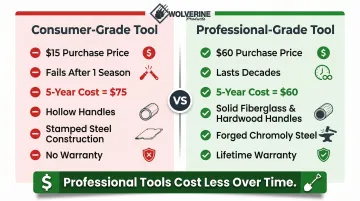
Consumer-grade tools sold at major chain retailers are typically made with lower-gauge steel (16-18 gauge vs. 14 gauge), hollow or composite handles with weak joints, and minimal quality control.
Professional-grade tools use materials like chromoly steel, aircraft aluminum, and solid hardwoods (ash or hickory) — engineered specifically for repeated heavy-duty use.
Total Cost of Ownership
A $15 shovel that breaks after one season costs $75 over five years. A $60 professional-grade model that lasts decades costs $60 total. For professionals who rely on their tools daily, equipment failure mid-job isn't just frustrating — it's a direct cost to their business.
| Material | Tensile Strength | Common Use |
|---|---|---|
| AISI 1018 Steel (consumer stamped tools) | 440 MPa | Light garden work |
| AISI 1045 Steel (mid-tier) | 655 MPa | Moderate durability |
| AISI 4130 Chromoly (professional) | 1,110 MPa | Contractor-grade digging and prying |
Distribution Signals Quality
Professional-grade tools are often sold through specialized channels rather than big-box retailers. That distribution model directly reflects a tool's quality tier. Wolverine Tools, for example, sells exclusively through:
- Wholesale landscape suppliers
- Independent garden centers
- Local hardware stores
This ensures their products meet contractor standards — not consumer pricing.
How We Tested and Chose These Tools
Each tool on this list was field-tested across real work conditions — not just assessed on spec sheets. Evaluation covered five core dimensions:
- Material and construction quality: Steel gauge, forging vs. stamping, handle material, joint construction
- Real-world performance: Testing across clay, loam, and rocky soils; extended use sessions; impact resistance
- Ergonomic comfort: NIOSH recommends 1.25-2 inch handle diameter for power tasks (shoveling), proper grip span, wrist alignment
- Warranty terms: Lifetime warranties vs. limited 1-year coverage
- Serviceability: Replaceable parts vs. disposable design
Tools that passed those criteria were then screened against a hard disqualification list. Any tool matching the following was cut from consideration:
Disqualifying factors:
- Hollow or press-fit handle connections
- Low-gauge stamped (not forged) heads
- Lack of manufacturer warranty
- Inability to service or replace parts
Conclusion
The best gardening tool is the one built to work as hard as you do. For professional contractors and landscapers especially, that means prioritizing material specs, construction quality, and warranty backing over price or brand familiarity.
Wolverine Tools has been manufacturing contractor-grade hand tools since 1994, backed by a lifetime warranty against manufacturer defects. Their full range is available through wholesale landscape suppliers, garden centers, and local hardware stores nationwide. To find an authorized distributor near you:
- Phone: 1-800-787-3562
- Email: info@wolverinehandtools.com
- Web: wolverinehandtools.com
Frequently Asked Questions
What is the best garden tool brand?
"Best" depends on tool category and use context. For professional-grade hand tools and shovels, brands manufactured specifically for contractors and landscapers (such as Wolverine Tools, Felco, and Bully Tools) offer superior materials and lifetime warranties compared to general consumer brands found at chain retailers.
What are the most essential gardening tools for beginners?
Start with five core tools: a trowel, pruning shears, a round-point shovel or spade, a rake, and a pair of durable gloves. Investing in quality on these five saves money long-term by eliminating the replacement cycle that comes with cheap consumer-grade alternatives.
How long should quality gardening tools last?
Professional-grade tools made with forged steel heads and solid hardwood or fiberglass handles can last decades with proper maintenance. Consumer-grade tools, by contrast, often fail within one to three seasons under regular use — a significant difference in total cost over a career.
What's the difference between bypass and anvil pruning shears?
Bypass pruners cut with a scissor-like action, creating clean slices ideal for live stems and healthy plant tissue healing. Anvil pruners crush the stem against a flat edge and are better suited for deadwood. Most gardeners prefer bypass for general pruning to avoid damaging living plants.
Should I buy a gardening tool set or individual tools?
Pre-packaged sets often include low-quality filler items to justify the bundle price. It's generally better to invest in individual, purpose-built tools from reputable manufacturers rather than sacrificing quality for convenience. Start with the five essentials, then add tools like a soil knife, transplanting spade, or long-handled cultivator once you know where your work actually takes you.
How do I maintain my gardening tools to extend their life?
A simple routine keeps professional-grade tools performing for decades:
- Brush soil off metal heads after every use
- Dry tools completely before storing to prevent rust
- Oil wooden handles with linseed oil periodically
- Sharpen shovel and pruner blades at the start of each season
- Replace worn grips or handles before they fail on the job