Introduction
The hand trowel is one of the most-used tools in any professional landscaper's kit—yet it's often the first to fail under daily job-site demands. When you're transplanting dozens of perennials, digging through compacted clay, or weeding tight borders between pavers, the difference between a consumer-grade trowel that bends mid-job and a professional-grade tool built to handle hundreds of tasks becomes immediately clear.
Not all trowels are created equal. Retail-grade versions may look similar on a shelf, but they lack the blade strength, tang integrity, and handle construction that professionals need to avoid costly mid-season replacements.
This guide reviews the best garden hand trowels of 2026—what separates premium tools from consumer-grade options, which specs actually matter on the job, and which trowels hold up in a working landscape kit.
Key Takeaways
- Carbon-steel full-tang trowels outperform consumer alternatives in strength and longevity
- Evaluate blade material, tang construction, and handle grip before buying for daily professional use
- Lifetime warranties signal manufacturing confidence and eliminate replacement costs
- Top 2026 trade-grade picks include DeWit, Niwaki, Wilkinson Sword, and Spear & Jackson
- Match head shape to task: narrow for deep planting, wide for scooping, serrated for roots
What Is a Garden Hand Trowel?
A garden hand trowel is a small handheld tool that has three main parts: the blade (or head), the tang (the metal neck connecting blade to handle), and the handle. Each component directly impacts performance and durability. The blade cuts into soil and scoops material, the tang provides leverage and absorbs stress during digging, and the handle transfers force while absorbing shock during repetitive use.
Primary Professional Uses
Professional landscapers rely on hand trowels for:
- Digging precise planting holes for perennials and annuals
- Transplanting seedlings without disturbing root balls
- Weeding tap-rooted plants in tight spaces
- Scooping compost and amendments into raised beds
- Working in confined areas like borders and container gardens
Which blade shape handles these tasks best depends on the job. Here's how the main profiles break down:
Blade Shape Variations
Trowel blades come in distinct shapes matched to specific tasks:
| Blade Shape | Best For |
|---|---|
| Narrow/Pointed | Deep-rooted planting, tap-root weeding, working between established plants |
| Wide/Scooped | General planting, transplanting, moving compost, potting work |
| Serrated Edge | Cutting through compacted soil, severing roots, opening mulch bags |
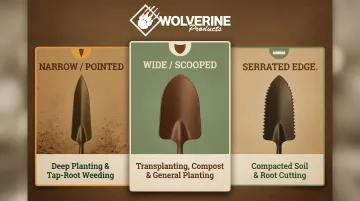
Most professionals keep a narrow and a wide trowel on hand — one for precision digging, one for moving material.
Best Garden Hand Trowels in 2026
These trowels were evaluated for blade strength, handle comfort, tang integrity, warranty coverage, and real-world performance across digging, planting, and weeding tasks. The list prioritizes tools suited to professional-frequency use—contractors and landscapers who need consistent daily performance, not just occasional home garden conditions.
DeWit Professional Planting Trowel
DeWit is a Dutch manufacturer known for hand-forged, professional-grade garden tools. Their planting trowel features a tempered carbon-steel head with bevelled edges and a pointed tip designed for precision planting.
The hand-crafted construction cuts cleanly through all soil types with strong leverage and is backed by a lifetime warranty.
Key Specifications:
| Feature | Specification |
|---|---|
| Blade Material | Tempered carbon steel, hand-forged with bevelled edges |
| Handle | Solid ash wood, 33cm total length |
| Warranty | Lifetime guarantee against manufacturing defects |
Performance Edge: The hand-forged carbon steel construction with laser-cut tang provides exceptional durability. The pointed tip and sharpened sides cut through compacted soil more efficiently than stamped alternatives, while the ash handle absorbs shock during repetitive use.
Niwaki Moku Trowel
Niwaki produces Japanese-influenced, hand-forged carbon-steel tools known for precision craftsmanship. The Moku Trowel features a lightweight design suited for efficient use across digging, weeding, and planting tasks. Hand-forged by a father-and-son team in Sanjo, Japan, it won the BBC Gardeners' World Magazine Best Buy award with a 4.5/5 rating.
Key Specifications:
| Feature | Specification |
|---|---|
| Blade Material | Hand-forged SK5 or SC carbon steel (model dependent) |
| Handle | Ash wood |
| Warranty | 2-year guarantee against defects |
Best For: Detail work and extended use without fatigue — the compact, lightweight blade excels here. The two-year warranty and premium price, however, position it as a specialist tool rather than a daily workhorse for heavy compacted soil.
Wilkinson Sword Stainless Steel Hand Trowel
Wilkinson Sword, founded in London in 1772, produces a stainless steel hand trowel positioned as a durable all-rounder. The traditional wide, well-scooped head suits planting, potting, and weeding tasks. Mirror-polished stainless steel resists rust and minimizes soil adhesion, while the weatherproofed ash handle provides comfortable grip during extended use.
Key Specifications:
| Feature | Specification |
|---|---|
| Blade Material | Mirror-polished stainless steel |
| Handle | Weatherproofed ash wood, 325mm total length |
| Warranty | 10-year guarantee |
Low-Maintenance Advantage: Stainless steel construction eliminates rust concerns in wet climates with no oiling required. It won BBC Gardeners' World Magazine Best Buy in July 2020 — a practical choice for users who prioritize durability and ease of care over maximum blade rigidity.
Spear & Jackson Kew Gardens Never Bend Carbon Hand Trowel
Spear & Jackson, one of the UK's oldest tool manufacturers (founded 1760), produces the Kew Gardens Never Bend Carbon Trowel with a carbon-steel head and FSC-certified weatherproofed ash handle. The carbon-steel blade is claimed to be at least 50% stronger than stainless steel, providing excellent leverage for compacted soil.
Key Specifications:
| Feature | Specification |
|---|---|
| Blade Material | Carbon steel with hammer-finished epoxy coating |
| Handle | FSC-certified ash, weatherproofed, 127mm handle length |
| Warranty | 15-year guarantee |
Trade-Off to Know: The epoxy coating protects the carbon-steel blade from rust, humidity, and soil alkalis without constant oiling. The shorter handle suits users with smaller hands or tight spaces, though it provides less leverage for larger hands during heavy digging.
What to Look for in a Professional-Grade Garden Hand Trowel
Blade Material: Carbon Steel vs. Stainless Steel
Blade material determines durability, maintenance requirements, and performance under heavy use.
| Carbon Steel | Stainless Steel | |
|---|---|---|
| Rigidity | Superior—handles compacted soil and roots | Flexes under heavy torque and prying |
| Edge Retention | Holds a sharp edge longer, less frequent sharpening | Dulls faster; better for light-to-medium work |
| Rust Resistance | Susceptible—requires regular oiling | Highly resistant; performs well in wet climates |
| Maintenance | Moderate; protective coatings help but don't eliminate it | Minimal—no oiling required |
| Best For | Daily professional use, heavy-duty tasks | Occasional or light-duty use |
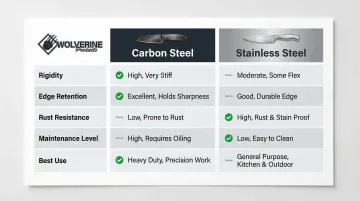
Professional Recommendation: For daily use, prioritize carbon steel with a protective coating or finish. The superior strength and edge retention outweigh the modest maintenance requirements for contractors who depend on tools that won't bend mid-job.
Tang Construction: The Hidden Failure Point
The tang—the connection between blade and handle—is where cheaper trowels bend or snap under leverage. Full-tang construction, where metal extends the entire length of the handle, distributes stress evenly and is the strongest option available.
Construction Types:
- Full-Tang or Solid-Forged: Metal runs through the entire handle, making the tool far less likely to fail under heavy prying or torque. This is the construction standard worth paying for.
- Forged Closed Socket: A forged solid socket blocks moisture and debris from entering the handle cavity, preventing wood rot and shrinkage over time.
- Tang-and-Ferrule (Socket-Tang): A two-piece design with a tang pushed into a drilled hole and secured by a metal ferrule. Common in budget tools—and the first thing to fail under high torque.
What to Look For: Examine how the blade connects to the handle. Avoid trowels where the tang simply inserts into a drilled hole. Look for continuous metal construction or forged sockets that wrap around the handle base.
Handle Material and Ergonomics
Handle material directly impacts comfort, shock absorption, and long-term usability during repetitive tasks:
- Hardwood (Ash or Hickory): Naturally shock-absorbent and warm to the touch. Ash is flexible without being brittle—the standard for professional tool handles. Hickory offers slightly greater density for impact-heavy work. Both require occasional linseed oil treatment to prevent cracking.
- Fiberglass (FRP): Lightweight and weather-resistant with no maintenance required. Stronger than wood in tensile strength, but transfers more vibration through the shaft—a real consideration during a full workday of repetitive digging.
- Plastic/Rubber: Low cost with decent grip comfort, but lacks the structural integrity for high-torque tasks and can crack or transmit shock more than hardwood under sustained pressure.
For contractors running trowels through a full workday, hardwood handles provide the best balance of comfort, shock absorption, and durability with proper care.
Head Shape Should Match Primary Task
Different head profiles excel at different tasks:
- Narrow, pointed heads: Best for deep planting holes, tap-root weeding, and working between established plants
- Wide, scooped heads: Optimal for transplanting, moving compost, and general planting
- Serrated edges: Cut through roots and compacted soil efficiently
Professional landscapers handling diverse daily tasks often benefit from owning two trowel types rather than compromising with a single all-purpose design.
Warranty Length Signals Manufacturing Confidence
Tools backed by lifetime warranties reflect the manufacturer's confidence in materials and build quality. According to the FTC, "lifetime" warranties often refer to the expected working life of the product, not the human lifespan, and typically cover manufacturing defects rather than standard wear and tear.
What Warranties Cover:
- Defective materials or assembly
- Manufacturing defects that cause premature failure
What Warranties Exclude:
- Normal wear and tear
- Blade dullness from use
- Damage from misuse or accidents
- Modifications or repairs by non-authorized parties
For professionals who calculate equipment ROI, a lifetime-warranted tool eliminates replacement cost cycles and signals a manufacturer willing to stand behind their construction quality.
How We Chose the Best Garden Hand Trowels
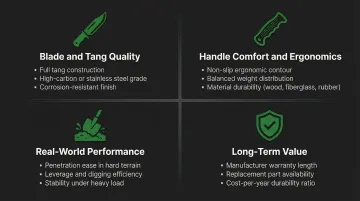
These trowels were assessed across four criteria:
- Blade and tang quality: Material grade, sharpness, construction method, and resistance to bending or breaking
- Handle comfort and ergonomics: Shock absorption, grip quality, and suitability for extended use
- Real-world performance: Effectiveness across planting, weeding, transplanting, and digging in various soil types
- Long-term value: Warranty terms, price-to-durability ratio, and maintenance requirements
Even a solid evaluation framework won't help if you walk into a purchase with common blind spots. These mistakes trip up buyers more often than any spec sheet would suggest.
Common Buyer Mistakes to Avoid
- Cheap trowels that bend mid-job end up costing more in replacements than a quality tool purchased once
- Tang construction is the most frequent structural failure point—and the detail most product listings skip over entirely
- Head shape determines what a trowel is actually good for: a wide scoop is clumsy for deep tap-root weeding, while a narrow blade moves compost inefficiently
This list prioritizes tools appropriate for professional, daily use—contractors, landscapers, and nursery professionals who need tools that perform consistently day after day, not just in occasional home garden conditions.
Frequently Asked Questions
What is the best trowel for gardening?
The best trowel depends on your use case. For daily or professional use, a carbon-steel full-tang trowel with a hardwood handle and lifetime warranty outperforms consumer-grade alternatives — resisting bending, holding an edge longer, and lasting multiple seasons without replacement.
What is a garden hand trowel used for?
Garden hand trowels are used for digging planting holes, transplanting seedlings, weeding tap-rooted plants, scooping compost and amendments, and working in tight or confined garden spaces like borders, raised beds, and container gardens where larger tools can't fit.
What are the three types of trowels?
The three main trowel types for gardening are:
- Standard planting trowel — wide, scooped blade for general planting and soil moving
- Transplanting trowel — narrow, deep blade for deep-rooted plants and tight spaces
- Potting trowel — large scoop for moving soil and compost in volume
What is the difference between a garden trowel and a transplanting trowel?
A standard garden trowel has a wider, shallower blade suited for general planting and scooping. A transplanting trowel has a longer, narrower blade designed to dig deeper holes for tap-rooted plants, bulbs, or seedlings — without disturbing surrounding soil.
How do I care for and maintain my garden trowel?
Basic maintenance keeps a quality trowel performing for years:
- Clean soil off after each use
- Oil carbon-steel blades regularly to prevent rust
- Sharpen the blade edge periodically using a file at the factory bevel angle
- Treat hardwood handles with linseed oil to prevent drying and cracking
- Store in a dry location
How long should a quality garden hand trowel last?
A well-maintained, professional-grade trowel with full-tang construction should last many years of daily use. Consumer-grade alternatives often need replacing within a season or two under heavy professional workloads.