Introduction
Container gardening has grown from a backyard hobby into a mainstream practice—across urban balconies, rooftop installs, and professional nursery operations alike. The 2023 National Gardening Survey reported an 80% household participation rate, with container gardening interest jumping 200% between 2021 and 2022. Yet most tools on the market are built for in-ground work, leading to damaged roots, cracked pots, and unnecessary strain.
Container gardening presents unique physical constraints that standard landscaping tools simply can't address. Container substrates have bulk densities ranging from 0.19 to 0.70 g/cm³—drastically lighter than mineral soils—requiring precise, controlled movements rather than brute force. Confined root systems and delicate potting mixes demand tools built for precision and restraint.
This guide breaks down the best container gardening tools by category, what separates a tool worth owning from one you'll replace in a season, and how professional-grade construction pays for itself over time.
Key Takeaways
- Container gardening relies on a small core set of precision hand tools—trowels, pruners, and cultivators cover most tasks
- Material quality matters: chromoly steel, hardwood handles, and aircraft-grade aluminum outlast cheaper alternatives
- Match tool size to container depth for clean results without damaging roots or pot walls
- Ergonomic grips reduce fatigue during extended sessions
- Invest in 5–7 quality tools rather than a large collection of low-grade items
Why Container Gardening Demands Specialized Tools
Container gardening and in-ground gardening require different tool approaches. Standard full-size shovels and border spades are engineered for dense mineral soils with bulk densities exceeding 1.10 g/cm³. Container substrates weigh far less and compress easily under pressure.
Using oversized tools in containers risks damaging fragile root systems, cracking pots, and making simple tasks unnecessarily difficult.
Soilless cultivation restricts root volume, increasing root-to-root competition for water, oxygen, and nutrients. This confined environment demands precision over power—tools that allow you to work between plants without disturbing neighboring root systems.
The tools below are selected based on three criteria:
- Versatility — handles multiple container tasks without swapping tools
- Material durability — withstands repeated use in tight, abrasive substrates
- Real-world performance — tested by home gardeners and nursery professionals alike
Best Digging and Planting Tools for Container Gardening
This category forms the core toolkit for container work. Every container gardener relies on these tools for planting, transplanting, and soil preparation.
Hand Trowel
The hand trowel is the single most-used container gardening tool. It scoops potting mix, digs planting holes, transplants seedlings, and mixes amendments directly in the pot.
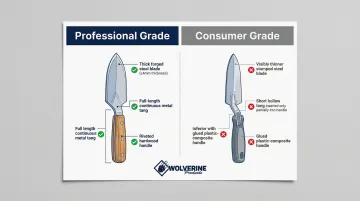
What separates professional-grade trowels from cheap alternatives? Construction quality. High-quality trowels feature forged stainless or carbon steel heads (≥4mm thickness) and full-tang construction where metal extends the entire length of the handle, secured with rivets or bolts. Cheap trowels use hollow-tang or glued-on heads that flex, bend, or fail after a season.
Handle material matters just as much. Wood handles (ash or hickory) absorb shock and vibration, while fiberglass offers superior strength with less give. Textured rubber or thermoplastic elastomer (TPE) grips reduce effort and maintain control when wet — a detail that separates tools built for professionals from hardware store alternatives. Wolverine Tools, for instance, uses chromoly steel and ash or hickory hardwoods across its hand tool line, backed by a lifetime warranty against manufacturer defects.
Hand Trowel Selection Guide:
| Feature | Specification |
|---|---|
| Construction | Full-tang or solid-forged; blade width 2.5–3 inches |
| Handle | Ash, hickory, fiberglass, or rubberized grip |
| Best For | General potting, transplants, mixing amendments |
Transplanting Trowel
The transplanting trowel's narrow, deep blade lifts seedlings with minimal root disturbance and seats plants into tightly packed containers without displacing surrounding soil.
Depth markings etched into the blade provide a practical advantage—they help professionals plant at consistent depths, critical for bulb planting at depths equal to two to three times their height and direct-sow container beds.
Transplanting Trowel Selection Guide:
| Feature | Specification |
|---|---|
| Construction | Narrow blade (1–1.5 inches wide) with etched depth markings |
| Handle | Hardwood or fiberglass; 10–12 inches for deeper container reach |
| Best For | Bulb planting, seedling transplants, tiered or densely planted containers |
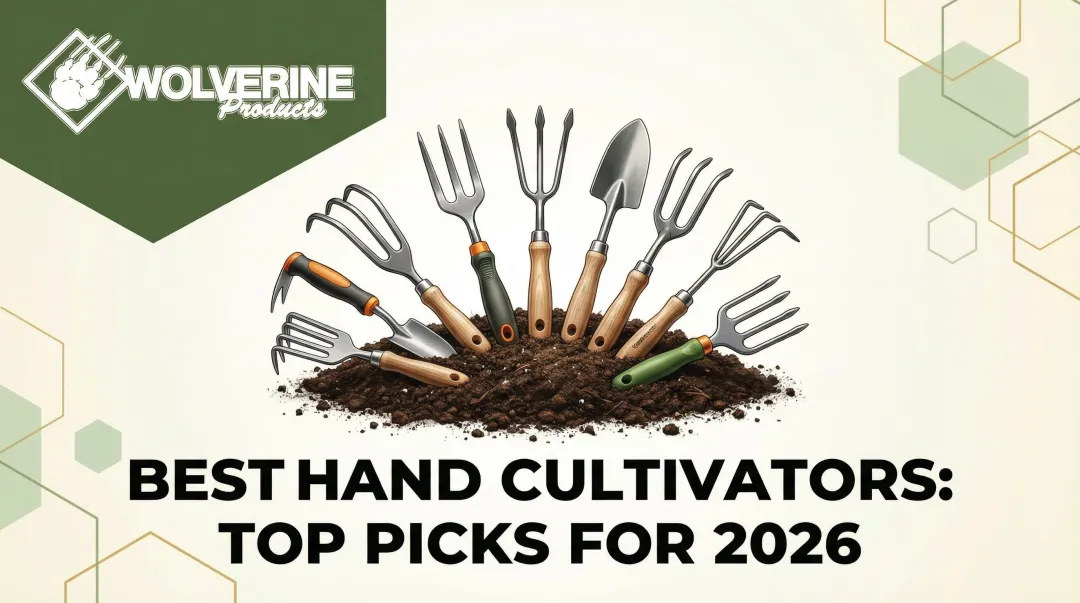
Hand Cultivator (Three-Tine Fork)
The hand cultivator is essential for loosening compacted potting mix between plants, working in granular fertilizer, and aerating soil without damaging root systems. Soil aeration promotes root growth, increases photosynthetic rate and chlorophyll content, and reduces plant death under stress conditions.
Potting mix compaction restricts airflow and slows water movement — both problems that compound quickly in containers. Three-tine cultivators handle confined spaces cleanly; five-tine versions suit larger raised containers or grow bags.
Hand Cultivator Selection Guide:
| Feature | Specification |
|---|---|
| Construction | Three-tine curved design; tine length 2.5–3 inches |
| Handle | Hardwood or ergonomic rubber grip; 10–12 inches |
| Best For | Soil aeration, fertilizer incorporation, surface cultivation in pots and window boxes |
Dibber (Dibble)
The dibber creates precise, consistent planting holes for seeds, bulbs, and small transplants without disturbing surrounding soil. That consistency is what makes it indispensable at scale — no guessing depth, no disturbed root zones from adjacent plantings.
Professional-grade dibbers include depth markings and are made from hardwood or steel-tipped wood. The steel tip penetrates denser potting mixes cleanly, and depth markings ensure consistent spacing that directly supports germination rates.
Dibber Selection Guide:
| Feature | Specification |
|---|---|
| Construction | Pointed or rounded tip with depth markings; T-bar or straight handle |
| Material | Hardwood body with optional steel tip |
| Best For | Seed sowing, bulb planting, transplanting plugs or seedlings into containers |
Best Cutting and Pruning Tools for Container Gardening
Confined roots push container plants to grow harder above ground. Regular pruning, deadheading, and stem management keep them healthy — and the right cutting tools make that work faster and cleaner.
Bypass Pruners
Bypass pruners (also called secateurs) are the go-to cutting tool for container gardeners. They remove dead growth, shape herbs, cut flower stems, and prune woody container shrubs.
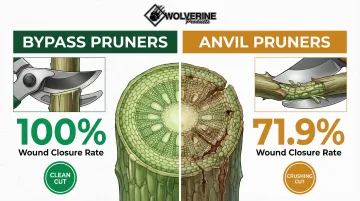
Bypass (scissor-action) designs make cleaner cuts than anvil-style pruners, reducing plant stress. A University of Florida study found that five years after pruning, 100% of wounds made with bypass pruners had fully closed, compared to 71.9% for anvil pruners.
Key quality indicators include high-carbon steel blades, a locking safety latch, ergonomic spring-loaded handles, and the ability to be resharpened. These features separate professional-grade pruners from disposable consumer tools.
Bypass Pruner Selection Guide:
| Feature | Specification |
|---|---|
| Blade Type | High-carbon or stainless steel; replaceable blades preferred for long-term use |
| Cut Capacity | Most container work needs a max cut diameter of 3/4 inch; choose pruners rated for that range |
| Best For | Herb harvesting, deadheading flowers, trimming ornamental shrubs in large containers |
Garden Scissors / Micro-Tip Snips
Smaller garden scissors or micro-tip snips handle what pruners and bare hands can't. Use them for harvesting herbs, trimming fine stems, deadheading compact annuals, and navigating tightly planted containers where full pruners won't fit.
Blade material and spring mechanism matter most here. Look for:
- Stainless steel blades that hold an edge through repeated harvesting sessions
- Self-opening spring mechanism to reduce hand fatigue on high-volume cuts
- Micro-tip precision for working between dense foliage without damaging nearby stems
Best Watering and Soil Care Tools for Container Gardening
Containers dry out faster than in-ground beds, and overwatering is the most common cause of container plant failure. The right watering tools give you precision control, while proper soil management tools keep container plants thriving.
Watering Wand
A watering wand is an extended watering tool (typically 16–30 inches long) with a gentle showerhead-style nozzle that delivers water directly to the soil without disturbing plants or splashing leaves. Use one any time you're working with overhead containers, hanging baskets, or deep planters where a standard nozzle can't reach the root zone.
Directed root-zone watering reduces the incidence of foliar diseases, as fungal spores require 9+ hours of free moisture to germinate. Overhead irrigation is inefficient for spaced containers due to wind drift and poor interception.
When selecting a watering wand, prioritize:
- Adjustable flow control for different plant types
- Shut-off valve at the handle to reduce wrist fatigue
- Lightweight aluminum or fiberglass shaft for extended reach
- Durable brass or reinforced plastic head for longevity
Container soils can lose 30% to 85% of their available water within a few hours, compared to 3 to 4 days for in-ground soils—making precise, targeted watering critical.
Soil Scoop
A dedicated soil scoop—wider and shallower than a standard trowel—makes filling containers, repotting, and measuring potting mix faster and cleaner than improvising with whatever's on hand.
Material and capacity are the main selection criteria. Aluminum or stainless steel scoops with wide mouths and a comfortable grip handle the job efficiently without bending or splitting under the weight of dense potting mixes. Professional nursery scoops typically include 85-ounce capacities with flat bottoms and high sloped sides for efficient hand-filling.
How We Chose the Best Container Gardening Tools
The evaluation criteria for this guide focus on three factors: material durability (steel grade, handle material, construction method), task-specificity for container work (size, weight, blade geometry), and long-term value (warranty coverage, repairability, replacement cost avoidance).
A common mistake buyers make is purchasing cheap consumer-grade tools from mass-market chains that look similar to professional tools but are made with thinner steel, weaker welds, and handles that crack or loosen after a season. The math is straightforward: a $120 forged trowel used twice weekly for 12 years costs roughly $0.19 per use, while a $22 stamped trowel lasting 18 months runs about $0.26 per use — and causes more fatigue along the way.

For professionals using container tools daily, equipment failure mid-job isn't just inconvenient — it's a direct cost. Commercial-grade tools address this with:
- Forged carbon steel construction for impact resistance
- Full-tang handles that won't loosen or snap under load
- Replaceable parts (blades, springs, bumpers) to extend service life
- Lifetime warranties on forged components
That durability advantage connects directly to safety. The Consumer Product Safety Commission reports over 400,000 emergency treatments annually for landscaping tool injuries, with repetitive strain injuries accounting for over 40% of gardening-related medical visits. Ergonomic, well-balanced tools cut physical stress during extended sessions — a factor that compounds across a full workday.
Conclusion
A small set of well-made, purpose-specific tools handles the vast majority of container gardening tasks efficiently and without strain. For most growers, five tools cover nearly everything:
- Trowel
- Transplanting trowel
- Cultivator
- Pruners
- Watering wand
Prioritize material quality and durability over upfront cost savings, especially if you garden regularly or professionally — quality tools that last a decade are cheaper than replacing budget versions every season. To explore Wolverine Tools' full line of professional hand tools, visit your nearest wholesale landscape supplier, garden center, or local hardware store.
Frequently Asked Questions
What tools do professional landscapers use?
Professional landscapers rely on core categories including digging tools (spades, shovels, trowels), cutting tools (pruners, shears, loppers), power equipment (mowers, trimmers), and measuring/layout tools. Professionals prioritize commercial-grade durability over consumer-grade alternatives to avoid mid-job failures.
What is considered professional landscaping?
Professional landscaping covers the design, installation, and ongoing maintenance of outdoor spaces for clients, including planting, grading, hardscaping, and plant care. It requires licensed, insured contractors with specialized equipment and expertise in horticulture and project management.
What is the 3-hour gardening rule?
The 3-hour rule refers to guidance advising gardeners to avoid strenuous activity during peak heat hours, typically between 11 a.m. and 2 p.m. or 3 p.m., to prevent heat exhaustion, heatstroke, and UV damage. Using ergonomic, well-balanced tools significantly reduces physical stress during gardening sessions.
What is the rule of 3 in landscaping?
The rule of 3 recommends planting in odd numbers (threes, fives, sevens) to create visually balanced, natural-looking arrangements. The human eye cannot easily divide odd groupings in half, making them more aesthetically pleasing. This principle applies equally to garden beds and container arrangements.
What is the 70/30 rule for gardening?
The 70/30 rule, pioneered by designer Piet Oudolf, dedicates 70% of a planting design to structural or evergreen plants for year-round interest, and 30% to seasonal accents for temporary color. This balance reduces maintenance while keeping the design visually engaging.