Introduction
Most hand cultivators on the market weren't designed for daily professional use. Consumer-grade tools flood the market, and the failure points are predictable: tines that bend in compacted soil, plastic handles that crack under pressure, welded connections that give out mid-job.
For landscape contractors and nursery professionals, tool failure isn't just an inconvenience — it's lost time and lost money. Material quality and build construction separate tools that last from tools that need replacing.
This guide breaks down the top hand cultivator picks for 2026 and what to look for when evaluating professional-grade options. If you're sourcing tools for a crew or stocking a supply operation, these are the distinctions worth understanding before you buy.
Key Takeaways
- Hand cultivators loosen soil, remove weeds, aerate beds, and incorporate amendments — the right pick hinges on tine strength, handle material, and use intensity
- Professionals need chromoly steel tines and solid wood or fiberglass handles; consumer-grade tools break down under daily use
- Key factors: tine material, tine count, handle type (wood, fiberglass, or cushion grip), and warranty coverage
- Top 2026 picks: Wolverine Tools for professionals, Radius Garden for ergonomic comfort, and Fiskars for light home use
- Professional-grade tools eliminate recurring replacement costs and deliver superior performance under demanding conditions
What Is a Hand Cultivator and Why It Matters
A hand cultivator is a short-handled tool featuring 3–5 curved metal tines used to loosen compacted topsoil, break up soil clumps, disrupt shallow weeds, and work amendments or fertilizer into garden beds. It differs fundamentally from a hand hoe, which uses a single flat blade for slicing weeds at the soil surface, and from a trowel, which is designed for digging and moving soil rather than aerating it.
Real-World Applications
Hand cultivators serve distinct roles across professional and home gardening settings:
- Raised bed preparation – Breaking up compacted soil before planting
- Row cultivation – Aerating soil between plants without disturbing root systems
- Weed disruption – Uprooting shallow weeds near sensitive plant root zones
- Amendment incorporation – Mixing compost, fertilizer, or soil conditioners into the top 2-4 inches of soil
- Transplant preparation – Loosening soil around transplant sites for better root establishment
For landscape professionals using cultivators daily on job sites, durability determines whether a tool earns its place in the truck. A tool that bends or breaks mid-job costs more than just the replacement price — it means lost billable hours, project delays, and frustrated crews.
The five picks below were selected on those exact criteria: build quality, material durability, ergonomic design, and verified performance in both professional and home-use settings.
Best Hand Cultivators: Top Picks for 2026
These five hand cultivators were evaluated on tine material and hardness, handle construction and grip comfort, overall durability under repeated use, intended use alignment, and long-term value including warranty coverage.
Wolverine Tools Hand Cultivator (W54FC)
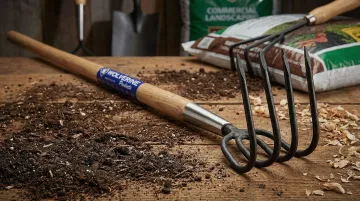
Wolverine Tools has been manufacturing professional-grade hand tools since 1994, supplying contractors, landscapers, and nursery professionals nationwide. Their W54FC hand cultivator is purpose-built for the demands of daily professional use, not weekend hobby gardening.
The W54FC features a forged steel head with 4 tines paired with a 54-inch wood handle (ash or hickory hardwood). Tools are designed and produced in-house, sold exclusively through professional landscape suppliers and hardware stores—not big-box chains—and backed by a lifetime warranty against manufacturer defects.
Forged steel construction delivers substantially more strength and service life than stamped or cast alternatives. That manufacturing standard, combined with Wolverine's use of chromoly steel, aircraft aluminum, and pulltruded fiberglass across their product line, makes the W54FC the benchmark for professional-grade cultivator quality.
Wolverine W54FC Specifications:
| Feature | Details |
|---|---|
| Tine Material & Build | Forged steel head with 4 tines; in-house manufacturing ensures strict quality standards |
| Handle Material & Length | 54-inch wood handle (ash or hickory hardwood construction) |
| Best For & Warranty | Professional contractors and landscape professionals; lifetime manufacturer's warranty against defects |
Corona Tools Hand Cultivator (CT-3030I)
Corona Tools is a respected professional landscaping tool brand with a long history of supplying contractors, nursery operators, and landscape professionals. Their CT-3030I hand cultivator sits firmly in the professional-to-prosumer tier.
The CT-3030I features a one-piece polished aluminum alloy structure designed not to bend, break, or rust, with 3 rigid, straight tines measuring 3.5 inches long. The cushioned, non-slip grip adds comfort during extended use. According to Corona Tools, the tool targets the landscape and agricultural industries directly.
The aluminum build makes it a natural fit for nurseries and greenhouses where rust resistance matters more than raw prying force. It won't displace forged carbon steel in heavily compacted soil, but for professionals who need lightweight, rust-immune handling day after day, it delivers.
Corona CT-3030I Specifications:
| Feature | Details |
|---|---|
| Tine Material & Build | One-piece polished aluminum alloy; 3 rigid straight tines, 3.5" long |
| Handle Type & Length | Aluminum handle with cushioned non-slip grip; 10.25" overall length |
| Best For & Price Range | Professional nursery and greenhouse use; $7–$12; limited lifetime warranty |
Fiskars 3-Claw Cultivator (200S)
Fiskars is a widely distributed garden tool brand that targets home gardeners and light-use landscaping tasks. Their 200S 3-claw hand cultivator is a consistent top seller in the residential category.
The 200S features a steel head with rust-resistant coating and 3 pointed tines, paired with a lightweight, teardrop-shaped composite/plastic handle. At 12 inches and 0.48 lbs, it maneuvers easily in tight spaces. Fiskars backs it with a full lifetime warranty.
That said, major retailers explicitly categorize the 200S as "Residential" grade. The plastic handle and lighter construction aren't engineered for the daily demands of commercial landscaping—this one belongs in a home garden shed, not a contractor's truck.
Fiskars 200S Specifications:
| Feature | Details |
|---|---|
| Tine Material & Coating | Steel head with rust-resistant coating; 3 pointed tines |
| Handle Design | Lightweight teardrop-shaped composite/plastic handle; 12" overall length |
| Best For & Price Range | Light-to-moderate home garden use; $6–$10; full lifetime warranty |
Radius Garden Ergonomic Cultivator (Model 206)
Radius Garden specializes in ergonomically engineered garden tools designed to reduce hand, wrist, and forearm strain during extended use. Their Model 206 hand cultivator is the standout pick for users prioritizing comfort over raw professional durability.
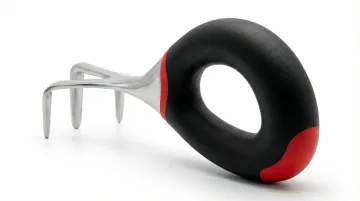
The 206 features a die-cast aluminum blade with 3 pointed tines (also available in PRO stainless steel variants) and the patented "Natural Radius Grip" (O-handle) made from non-latex thermoplastic elastomer and polypropylene. That O-handle keeps the wrist in a neutral position, earning the Arthritis Foundation's Ease of Use Commendation.
NIOSH guidelines confirm that a straight wrist and handles longer than the widest part of the hand (4 to 6 inches) meaningfully reduce injury risk. At 13.5 inches and 10 oz, the 206 hits both marks—making it the right call for older gardeners, users with arthritis or grip limitations, or anyone grinding through long stretches of repetitive soil work.
Radius Garden 206 Specifications:
| Feature | Details |
|---|---|
| Tine Material & Configuration | Die-cast aluminum blade with 3 pointed tines; 6.75" blade length, 3.125" width |
| Ergonomic Handle Design | Patented Natural Radius Grip (O-handle); non-latex TPE and polypropylene; Arthritis Foundation Ease of Use Commendation |
| Best For & Price Range | Gardeners prioritizing ergonomics and reduced strain; ~$34 |
Edward Tools 3-Claw Cultivator
Edward Tools has built its customer base among home gardeners primarily through online retail channels. Their 3-claw cultivator is a widely purchased, budget-friendly option suited to casual, occasional garden use.
The cultivator features carbon steel tines paired with a solid oak handle with an ergonomic rubber grip. At 14.45 inches and 0.85 lbs, it provides decent leverage for light soil work, and it's marketed as "heavy duty" with a lifetime warranty.
The real-world picture is more cautious. Customer reviews on Amazon include multiple reports of the handle snapping at the ferrule during initial use in hard soil. At roughly $19.95, the price is fair—but this tool isn't built for professional workloads or repeated daily use.
Edward Tools 3-Claw Specifications:
| Feature | Details |
|---|---|
| Tine Material & Build | Carbon steel blade and head; multiple reports of handle failures under hard soil conditions |
| Handle Type & Grip | Solid oak handle with ergonomic rubber grip; 14.45" overall length |
| Best For & Price Range | Casual home garden use and occasional soil work; ~$19.95; lifetime warranty (with noted durability concerns) |
How We Chose the Best Hand Cultivators
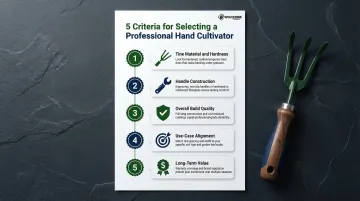
Selecting the right hand cultivator requires evaluating five critical criteria:
Tine material and hardness – Chromoly 4140 steel delivers yield strength up to 142,000 psi, nearly double the 77,000–89,900 psi of standard 1045 carbon steel. Hardened or chromoly tines hold their edge in rocky or clay soils; soft carbon steel flexes and dulls quickly under daily professional use.
Handle construction – Material durability, grip comfort, and connection strength to the head. American hardwood (ash or hickory) absorbs shock and lasts for years. Pulltruded fiberglass offers weather resistance and strength. Plastic and thin aluminum handles crack under pressure and create weak points at the ferrule.
Overall build quality – Weld integrity, rust resistance, and tolerance for repeated impact. Forged one-piece construction or double-riveted connections eliminate weak points. Aluminum alloy offers rust immunity but sacrifices prying strength compared to forged steel.
Use-case alignment – A tool built for weekend raised beds will fail under daily contractor workloads. Professional daily soil work demands heavier tines, stronger welds, and handles rated for thousands of uses — not occasional weekend sessions.
Long-term value – Warranty coverage and replacement frequency determine true cost of ownership. As Gempler's professional tool cost analysis notes, recurring replacement of cheap tools costs more over time than buying a durable professional-grade tool once.
Common Buyer Mistakes
The most common mistakes when selecting a hand cultivator include:
- Choosing purely on price – soft tines bend after a few uses in compacted soil, which means buying the same tool three times instead of once
- Ignoring handle material – plastic and thin aluminum crack under pressure; ash, hickory, and fiberglass handle the same punishment for years
- Buying consumer-grade tools for professional workloads adds up fast — replacement costs and lost productivity on a job site outpace any upfront savings
These mistakes share a root cause: buying tools designed for retail shelves rather than job sites. Professional-grade tools, including those made by Wolverine Tools, are distributed exclusively through wholesale landscape suppliers, garden centers, and professional hardware stores — channels that stock products built for daily contractor use, not seasonal consumer demand.
Conclusion
The best hand cultivator is the one matched to your actual use case. A professional landscape contractor doing daily soil work on job sites requires a very different tool than a home gardener preparing raised beds on weekends. Confusing the two categories leads to either unnecessary expense or chronic underperformance.
Once you've matched the tool to the job, material quality determines how long it holds up. Tine hardness and handle construction are the two variables that separate tools worth buying from tools worth replacing. Forged steel or chromoly tines penetrate compacted soil without bending. Solid wood or fiberglass handles absorb shock and last for years—cutting out the downtime and replacement costs that cheaper tools quietly add up to.
Professional contractors and landscape professionals can find Wolverine Tools' full range of professional-grade hand tools through wholesale landscape suppliers, garden centers, and local hardware stores nationwide. For wholesale or trade inquiries, contact info@wolverinehandtools.com or call 1-800-787-3562.
Frequently Asked Questions
What is a hand cultivator used for?
Hand cultivators loosen and aerate topsoil, break up compacted clumps, disrupt shallow weed roots, and mix fertilizer or compost into garden beds. They're particularly useful for precision work around plant root zones in both landscaping prep and garden bed maintenance.
How many tines should a hand cultivator have?
3-tine models offer more precision in tight spaces between rows or densely planted beds; 4- and 5-tine models cover more surface area for faster work in open beds. The right choice depends on your garden layout, soil density, and whether you prioritize speed or control.
What is the difference between a hand cultivator and a hand hoe?
A hand cultivator uses multiple curved tines to loosen, aerate, and break up soil structure. A hand hoe uses a single flat blade primarily for slicing through weeds at the soil surface or creating planting furrows. They serve different functions and work best used together.
What material is best for hand cultivator tines?
Hardened steel or chromoly steel tines offer the best penetration strength and bend resistance for professional use. Carbon steel works for occasional light-duty tasks, but thinner or softer steel will flex and dull quickly in compacted clay or rocky soil.
How do I clean and maintain a hand cultivator?
After each use: rinse off soil, dry the tines, and apply a light coat of oil to prevent rust. Periodically check handle connections for looseness — especially on wood-handled tools during humidity swings — and wire brush any rust spots. Sand wooden handles as needed to prevent splinters.
Can a hand cultivator break up hard, compacted soil?
Professional-grade cultivators with hardened steel tines can work through moderately compacted soil effectively. However, severely compacted ground benefits from pre-loosening with a full-size tiller or fork first. Trying to force a hand cultivator through extreme compaction risks bending the tines or stressing the handle joint, leading to tool failure.